
Track your MTG collection's value over time
Published · Updated
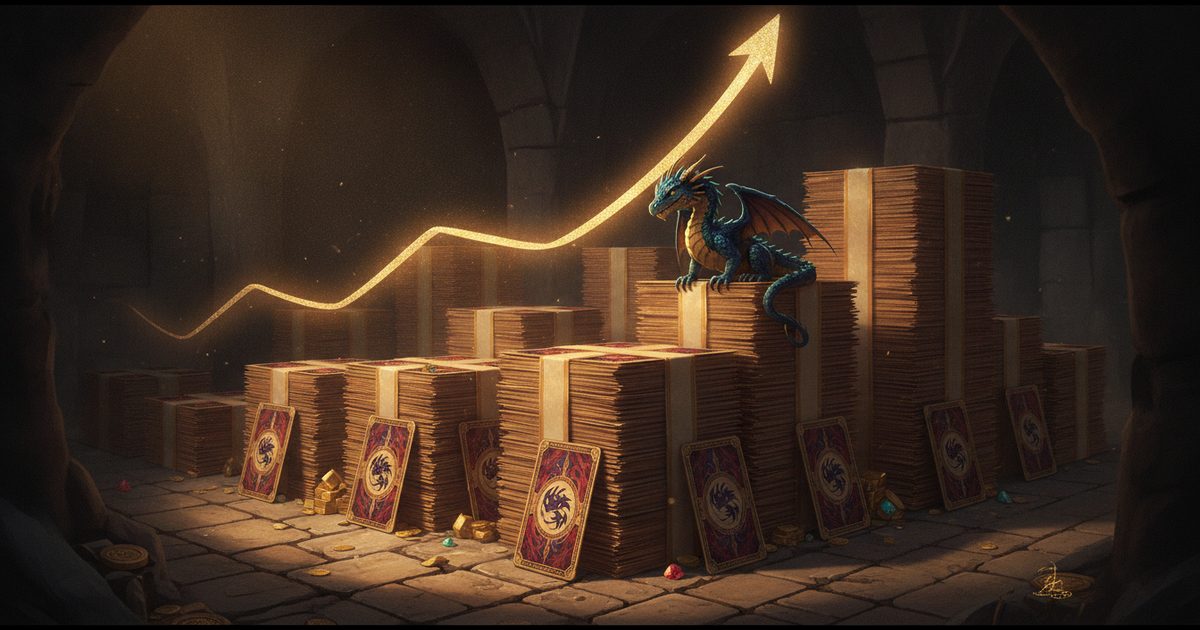
Ask a Magic player what their collection is worth and you'll get a shrug and a number they made up in 2019. Prices move constantly (reprints crater a staple, a Commander deck makes a bulk rare a £15 card), and unless something is tracking it, "what's it worth" is always a guess.
The Cardboard Deals app makes collection value a number you can actually watch.
Building the collection
Add cards two ways: search by name and pick the exact printing, or scan them: scan, confirm, added, next. Each entry carries the details that actually move value: printing, finish, condition, quantity, and what you paid for it.
Graded cards get first-class treatment. Mark a copy as PSA, BGS, CGC or SGC with its grade, and it's valued against graded prices for that grade band, never against raw copies. A PSA 10 and a played raw copy of the same card are different assets, and lumping them together is how every spreadsheet lies to its owner.
Watching it move
Your collection is revalued daily against current market data, and the app charts the total over time. That chart is quietly the most useful thing in the app: it tells you whether your collection is drifting up or down, shows you what a reprint announcement actually did to your shelf, and turns "I think it's gone up" into a line you can point at.
The stats sit alongside it: what the collection is worth now, what you paid in total, and the gap between the two.
Selling without losing the plot
When you sell a card, mark it sold with the price you got. It moves to your Sold tab and the app tracks your realised gains, actual money made, kept separate from paper value. Cards you bought through a Cardboard Deals link get verified-purchase treatment automatically, savings-versus-market included.
Over time that gives you the answer serious collectors want: not just "what is it worth", but how am I actually doing?
Two habits that make it work
Log the price you paid. Value-over-time is interesting; value-versus-cost is the real story, and it only exists if acquisition prices go in.
Add cards when they arrive. A collection tracker you update quarterly is a spreadsheet with extra steps. Scan-on-arrival takes ten seconds and keeps the number true.
Collection tracking is free in the app at cardboarddeals.com/app. Start with the binder you'd rescue in a fire; the rest can follow at the weekend.